
Middle English Prose
The Cloud of Unknowing Author

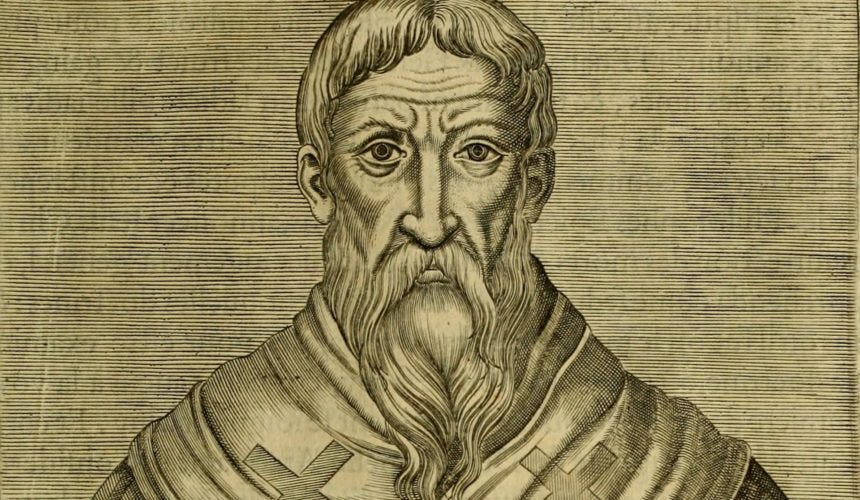
Prior to my rather long hiatus from typing at the internet, I had promised a series of posts on The Cloud of Unknowing. The treatise itself reads much like the title would imply: like walking through a cloud. Key terms and ideas get introduced early on only to be explained much later in the work (if not in a subsequent work). The author himself mentions this very issue in the second sentence of The Cloud:1
&, ouer þis, I charge þee & I beseche þee, bi þe autoritie of charitie,
þat ȝif any soche schal rede it, write it, or speke it, or ells here it be
red or spokin, þat þou charge hem, as I do þee, for to take hem tyme
to rede it, speke it, write it, or here it, al ouer. For, parauenture, þer
is som mater þerin, in þe beginning or in þe middle, þe whiche is
hanging & not fully declared þer it stondeþ; & ȝif if be not þer, it is
sone after, or ells in þe ende. Wherfore, ȝif a man saw o mater &
not anoþer, parauenture he miȝt liȝtly be led into errour & þerfore,
in eschewing of þis errour boþe in þiself & in all oþer, I preye þee 1.30
par charite do as I sey þee.
The errors into which one might fall upon a superficial and incomplete reading of this work are wicked indeed, dear Papists: Arianism, indifferentism, pantheism and generealised gnosticism, to name but a few. Of more direct import, it’s fiendish to get a grip on writing a commentary and semi-academic essays on it without getting bogged down scribbling out dozens of pages explaining the first two chapters.
Thus it seemed to me that the best place to start would be the theology of it all, the neo-Platonist apophatic theology / contemplative prayer, the Mystica Theologia of pseudo-Dionysius the Areopagite, as translated and adapted by the Cloud author himself. The work itself amounts to less than 1/7th of The Cloud of Unknowing in length and will serve to get much of the “explaining” out of the way.
In this post, I shall not delve into the “explaining” or even context of the work. Screeds will follow as I work through the entire treatise, commenting on the language, theology, historical context, rhetoric, translation, linguistics and the tradition of mysticism in the West and, perhaps, the Greek Orthodox world. For the time being, allow me to present, dear readers, an example of the kind of fun to be had - Middle English which almost resembles psychedelic poetry, Latin, and fifth century Greek. Just picture it: all that excitement even before getting to the theology and grammar. The author of the Cloud is known for his sense of humor and his dexterity with language. The prologue to Deonise takes some beating in the latter respect. Note the jarring and evocative contradictions - shining darkness, wise silence, The language’s a treat, as are the Latin and the Greek.
Please do note the linked words which will take one directly to the University of Michigan Middle English dictionary.2 The numbering to the side of the texts refers to the Phyllis Hodgeson 1982 edition of the text - page number. line. I use this referencing due to the fact that much of the secondary literature references Hodgeson’s edition in this manner.
Þe Prolog upon þe Translacioun of Deonise Hid Diuinite
Þis writyng þat next foloweþ is þe Inglische of a book þat Seynte
Denys wrote vnto Timothe, þe whiche is clepid in Latyn tonge
Mistica Theologia. Of þe whiche book, for þi þat it is mad minde in þe
70 chapter of a book wretin before (þe whiche is clepid Þe Cloude of 119.5
Vnknowinig) how Þat Denis sentence wol cleerli afferme al þat is
wretyn in þat same book: þerfore, in translacioun of it, I haue not
onliche followed þe nakid letter of þe text, bot for to declare þe
hardnes of it, I haue moche followed þe sentence of þe Abbot of Seinte
Victore, a noble & a worþi expositour of þis same book. 119.10
Þis is Seinte Deonise Preier
Þou vnbegonne & euerlastyng Wysdome, þe whiche in þiself arte
þe souereyne-substancyal Firstheed, þe souerreyn Goddesse, & þe
souereyn Good, þe inliche beholder of þe godliche-maad wisdom
of Cristen men: I beseche þee for to drawe us up in an acordyng 119.15
abilnes to þe souereyn-vnknowen and þe souereyn-schinyng heiȝt of
þi derke inspirid spekyneges, where alle þe pryue þinges of duinytee
ben kouerid and hid vnder þe souereyn-schinyng derknes of wisest
silence, making þe souereyn-cleerest souereynly for to schine priuely
in þe derkyst; and þe whiche is – in a manner þat is always inuisible & 119.20
vngropable – souereynli fulfilling wiþ ful fayer cleertees alle þoo
soules ben not hauyng iȝen of mynde.
And for alle þees þinges ben abouen mynde, þerfore wiþ affeccyon 120.1
abouen mynde as I may, I desire to purchase hem vnto me wiþ þis
preier.
Latin version of John Sarracenus, 119.12 - 22.
Compresbytero Timotheo, Dionysius presbyter salutem.
Trinitas supersubstantialis et superdea et superbona, inspectrix divinae sapientiae Christianorum, dirige nos ad mysticorum Eloquiorum superignotum et supersplendentem et summum verticem, ubi simplicia et absoluta et inconversibilia Theologiae mysteria cooperta sunt secundum supersplendentem occulte docti silentii caliginem, in obscurissimo superclarissimum supersplendere facientem, et in omnio impalpabili et invisibili superpulcris claritatibus superimplentem non habentes oculos mentis.
Igitur ista mihi quidem sint oratione postulata.
Original Greek:
Τριὰς ύπερούσιε, καὶ ύπέρθεε, καὶ ύπεράγαθε, τῆς Χριστιανῶν ἔφορε θεοσοφίας, ἴθυνον ἡμᾶς ἐπὶ τὴν τῶν μυστικῶν λογίων ύπεράγνωστον, καὶ ύπερφαῆ καὶ ἀκροτάτην κορυφήν, ἔνθα τὰ ἁπλᾶ, καὶ ἀπόλυτα, καὶ ἄτρεπτα τῆς θεολογίας μυστήρια, κατὰ τὸν ύπέρφωτον ἐγκεκάλυπται τῆς κρυφιομύστου σιγῆς γνόφον, ἐν τῷ σκοπτεινοτάτῳ τὸ ὑπερφανέστατον ὑπερλάμποντα, καὶ ἐν τῷ πάμπαν ἀναφεῖ καὶ ἀοράτῳ τῶν ύπερκάλων ἀγλαῖων ύπερπληροῦντα τοὺς ἀνομάτους νόας. Ἐμοὶ μὲν οὗν ταῦτα ηὔχθω.3
On the next occasion, on to the theology of it all.
For a different edition, with lines numbered in seriatim, modern orthography, introduction, bibliography and commentary see Cloud of Unknowing.
For other unfamiliar vocabulary, please see Middle / Early Modern English Glossary in the “Reference & Guides” section of the Peregrinus page. It may be necessary with the above piece to root around a bit - words may be listed under another spelling variant. I do try to cover the all the bases, but some do get by me.
Please note, “þ” = “th”; “ȝ” = g/gh in middle of word; y or g at beginning (mostly)
Migne, JP (1857) Patrologiae Gracae Tomos III: s. Dionysius Areopagita, col 997.